Have you ever worked really hard for something, finally gotten it going, and then realized you aren’t sure you want to keep doing it?
Maybe you spent months building a business, creating an offer, developing a service, or working toward a goal. You invested your time, energy, and money. You told people about it. You were excited about it.
But somewhere along the way, something changed.
Now, you’re wondering whether you want to keep going in the same direction.
And almost immediately, guilt shows up.
You might think, “But I wanted this. I worked so hard for this. What will people think if I change my mind?”
Here’s something I want you to remember: You’re allowed to change the dream.
You can be proud of what you’ve built and still decide that you want something different. You can appreciate the chapter you’re in while recognizing that you’re ready for another one.
In this third installment of our November series, Permission to Want More, we’re talking about what happens when your next chapter takes you somewhere you didn’t originally plan to go.
Because sometimes growth doesn’t mean adding more to your plate. Sometimes it means deciding what you’re ready to leave behind.
Your Original Plan Doesn’t Have to Be Your Forever Plan
One reason changing direction feels so difficult is that we tend to treat our plans like promises.
We decide we want something, and then we feel obligated to keep wanting it.
You wanted to grow your business. You wanted to work with certain clients. You wanted to launch that offer or reach a particular milestone.
But what happens when you gain more experience and realize that what you imagined isn’t exactly what you want anymore?
When you first started, you didn’t know everything you know today.
You didn’t know how much time certain tasks would take, which parts of the work you would enjoy, or what managing everything would actually look like on an ordinary Tuesday.
Now you have that information.
And it’s okay to let what you’ve learned influence what you want next.
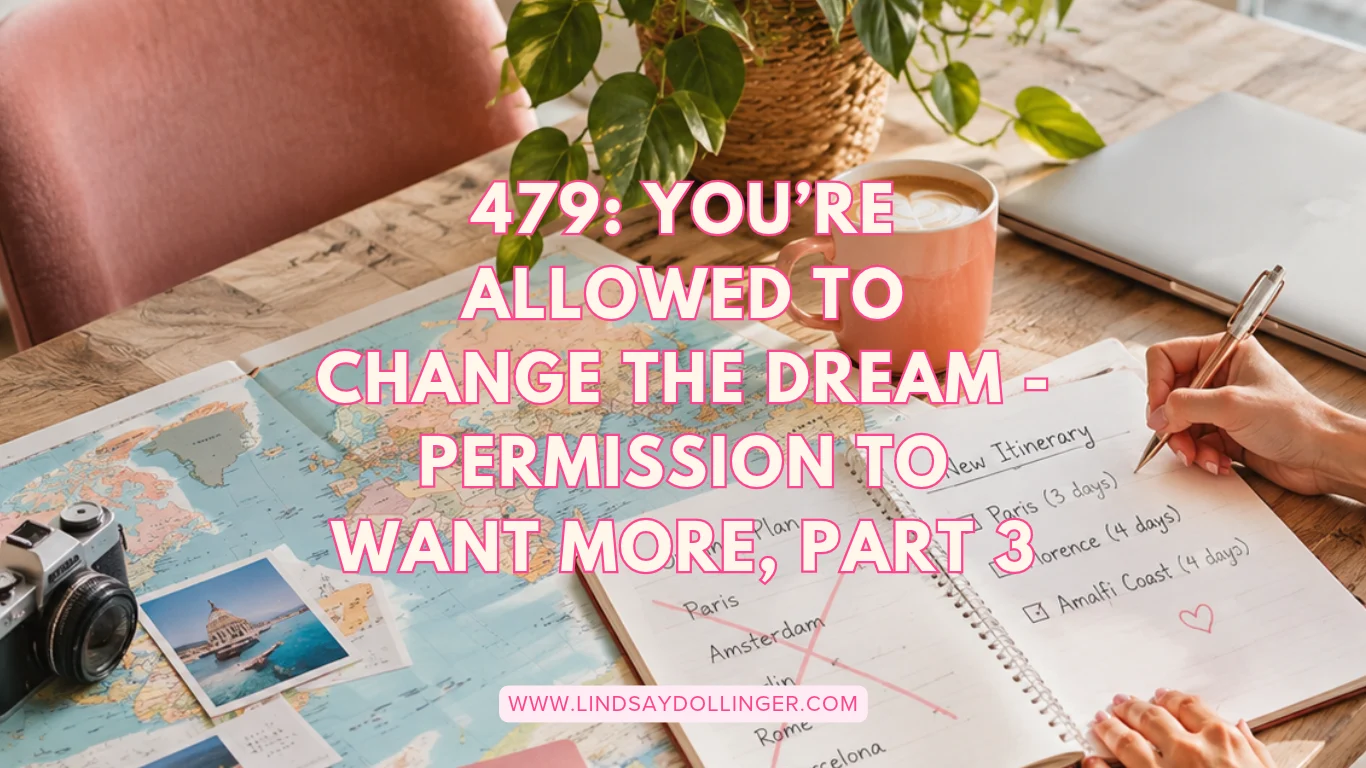
Think about booking a trip. You might initially be excited about an itinerary that includes five destinations in seven days. But once you look at the details, you realize you’d rather spend more time exploring fewer places.
You adjust the itinerary.
You don’t consider the original plan a failure. You simply use what you’ve learned to make a better decision.
Your business and personal goals deserve that same flexibility.
The version of you who made the original plan was working with the information she had at the time. The version of you today knows more.
You are allowed to make a different decision.
Don’t Let Everything You’ve Already Invested Keep You Stuck
When you start thinking about changing direction, one of the first things your brain might remind you of is everything you’ve already invested.
The money. The time. The courses. The website. The branding. The resources you’ve created.
It’s easy to think that because you’ve already put so much into something, you have to keep doing it.
But there’s another question worth asking:
What will continuing to invest in this require from me moving forward?
If you keep offering a service for another year, what will it ask of your schedule?
How much time will you spend maintaining it?
What other opportunities might you miss because you’re still committed to something that no longer feels like the right fit?
Sometimes we spend so much time justifying our past investments that we forget to evaluate the next investment we’re about to make.
Your time next month matters, too. Your energy next year matters, too.
And here’s something important: You don’t lose everything you’ve learned just because you decide to change direction.
The skills you developed are still yours.
Maybe you learned how to build relationships, write emails, serve clients, organize projects, or communicate your ideas. Those abilities can carry into whatever you decide to pursue next.
For example, the skills Lindsay developed through teaching continue to help her in business. Being able to explain processes, break complicated ideas into manageable steps, and help people work through questions are valuable skills in many different areas.
Your previous chapter wasn’t wasted just because you’re ready for a new one.
Being Good at Something Doesn’t Mean You Have to Keep Doing It
Here’s another reason we sometimes stay in situations longer than we should: We’re good at them.
People know they can count on us. They appreciate what we do. We have experience, and we know how to deliver results.
So we keep saying yes.
You’re good at organizing events, so you keep volunteering.
You’re good at explaining things, so you keep adding calls.
You’re good at solving problems, so everyone brings their problems to you.
Before you know it, your calendar is full of things you’re capable of doing, but there’s very little room for the things you’re actually interested in exploring.
You can be capable of doing something and still decide that you don’t want it to be your priority.
Being good at something doesn’t automatically mean it’s where your time and energy should go.
This is especially important when you’re building a business alongside a full-time job. Your available hours are limited, and every new commitment has to come from somewhere.
If you want to give a new direction a real chance, you may need to let go of some responsibilities that no longer fit.
That might disappoint someone who preferred the way things were before.
And that’s okay.
Someone can be disappointed and still respect your decision.
Is It Time to Change Direction or Do You Just Need a Break?
Before making a major change, it’s worth understanding where your feelings are coming from.
Sometimes a difficult week makes everything feel overwhelming. When you’re tired, overcommitted, or dealing with too many responsibilities, even the things you normally enjoy can feel exhausting.
So how do you know whether you genuinely want something different or whether you simply need to adjust your current situation?
Start by asking yourself:
- When did I start feeling this way?
- Does the feeling show up around one specific part of my work?
- Does it improve when I get some rest?
- Has this feeling continued even during weeks when things are going well?
- Am I unhappy with the work itself, or with the way I’m currently managing it?
These questions can help you identify what’s really happening.
For example, maybe you still love working with travel clients, but you’re frustrated because you’re answering messages at all hours.
Maybe you enjoy planning trips, but you’re spending too much time rewriting the same instructions or answering questions that could be addressed through a better process.
In that situation, you might not need to change your entire business. You might need clearer boundaries, better systems, or a more manageable workload.
Try making adjustments before assuming everything needs to change.
But if you’ve addressed those issues and still feel drawn toward something different, don’t ignore that feeling either.
Sometimes the work itself is no longer aligned with what you want your life to look like.
And that’s worth paying attention to.
Ask Yourself: If This Became Easier, Would I Still Want It?
Here’s a question that can help you get clearer about what you really want:
If this became easier to run, would I still want to do it?
Imagine having better systems, clearer boundaries, and a more manageable schedule.
Would you feel excited about continuing?
Or would you mostly feel relieved that it was taking less time away from something else you’d rather be doing?
Give yourself an honest answer.
Then ask another question:
What part would I actually miss if I stopped?
Maybe you love helping people, but you’d prefer to do it through written resources instead of individual calls.
Maybe you enjoy working with groups, but you’d rather host fewer events.
Maybe you love travel planning, but you want to focus on the types of trips you genuinely enjoy researching.
You don’t always have to make an all-or-nothing decision.
There are options between continuing exactly as you are and changing everything overnight.
You can adjust one offer, change your schedule, pause a commitment, or test a new idea before making a larger transition.
Give yourself permission to explore those possibilities.
Make Sure You’re Chasing Your Own Dream
It’s easy to look at what other people are doing and decide you should want the same things.
Someone is hiring a team.
Someone is launching a course.
Someone is hosting a retreat.
Someone else is building a business that looks incredibly impressive on Instagram.
And suddenly, those goals find their way onto your own to-do list.
But have you stopped to ask whether you actually want the day-to-day responsibilities that come with those achievements?
Would you enjoy managing a team?
Would you want to deliver that offer every month?
Would hosting that event fit your schedule, finances, and personal priorities?
You can admire someone else’s results without wanting to recreate their entire business.
Remember the question from the first episode of this series: What would your dream change about an ordinary Tuesday?
Bring that question back into the conversation.
If you achieved the goal you’re currently pursuing, what would your everyday life look like?
Would you enjoy the meetings, responsibilities, and schedule that came with it?
And if your priorities have changed, what would you choose now?
Your dream should reflect the life you want to live, not just the milestones you see other people celebrating.
You Don’t Owe Everyone a Long Explanation for Changing Your Mind
Sometimes making the decision to change direction isn’t even the hardest part.
It’s telling people.
You might worry that people won’t understand. You may feel like you need to explain every detail or justify why you’re moving away from something you previously seemed excited about.
But your explanation doesn’t have to be complicated.
You could simply say:
“I’ve learned a lot through this work, and I’m shifting my focus toward something that better aligns with my current priorities.”
Or:
“I’ve decided to pause this offer so I can give more attention to another area of my business.”
You can communicate what’s changing and what people need to know without sharing every part of your decision-making process.
Of course, if you have existing clients, customers, or commitments, it’s important to handle those responsibly.
Make a transition plan. Communicate clearly. Give people the information and notice they need. Be specific about what you’ll complete and any important dates.
But you can also give yourself some privacy while you work through the decision.
You don’t have to announce every possibility before you’ve figured out what you want.
You are allowed time to think, reflect, and make a thoughtful decision.
How to Give Yourself Permission to Change the Dream
If you’ve been questioning a goal, offer, or commitment lately, here’s a simple exercise to help you get clearer.
Choose one thing you’ve been considering changing.
Then work through these steps.
1. Remember why you originally said yes.
What were you hoping to get from this goal or commitment?
Was it additional income? Flexibility? Creativity? Connection? Experience?
Write down what attracted you to it in the first place.
2. Identify what you’ve learned.
Now that you’ve experienced it, what do you know that you didn’t know before?
What do you enjoy? What feels difficult? What takes more time than you expected?
Be honest about both the positive and challenging parts.
3. Finish this sentence.
“If I were making this decision today, knowing what I know now, I would…”
Don’t immediately explain why you can’t make that choice. Just let yourself answer.
Maybe you would choose the same thing again.
Maybe you would choose it with different boundaries.
Maybe you’d keep one part and let another go.
Or maybe you’d decide that your energy belongs somewhere else.
4. Choose one practical next step.
Your next step might be reviewing your numbers, tracking how you’re spending your time for a week, pausing new bookings for an offer, or talking with someone who can help you think through a transition.
You could also test a small part of a new idea before committing to a larger change.
Make the action specific enough that you’ll know when you’ve completed it.
And if you realize you need rest before you can make a clear decision, put some actual space on your calendar.
You don’t have to wait until every task is finished to give yourself permission to rest.
Be Grateful for the Chapter You’re Leaving and Excited About the One Ahead
With Thanksgiving approaching, this is a good opportunity to acknowledge what our earlier chapters have given us.
Think about the relationships you’ve built, the skills you’ve developed, and the experiences that helped you discover what you’re capable of.
You can be thankful for all of those things while making different decisions about your future.
Lindsay has been reflecting on this through her own business decisions. As she shifts her focus toward growing her travel agency and building The Wanderlust Book Society, she’s making room for the things she wants to prioritize next.
She loves travel, books, and connecting people around things they’re excited about. Bringing those interests together more intentionally is part of the direction she’s exploring.
That doesn’t mean the previous work didn’t matter.
It means she’s giving herself permission to decide where her time and energy should go now.
And you can do the same.
You don’t have to keep pursuing a goal simply because it was once important to you.
You don’t have to add every new idea on top of everything you’ve already committed to.
Sometimes making room for something new means allowing yourself to release something old.
Final Thoughts: You’re Allowed to Want Something Different
If there’s one thing I want you to take away from this episode, it’s this:
Changing your mind doesn’t mean you failed. It means you’re making decisions with new information, new experiences, and a better understanding of what you want.
You can be proud of what you’ve built and still decide you’re ready for a different direction.
You can appreciate your past efforts without making them a reason to stay stuck.
And you can be excited about your next chapter without having every detail figured out.
So, if you’ve been questioning a goal, offer, or commitment, take some time this week to look at it honestly.
What would make it fit better?
What would you miss if you stopped?
What do you want to make room for?
You don’t need to have your entire next chapter planned today.
You just need to give yourself permission to consider what you really want.
And remember, you’re allowed to change the dream.
-Lindsay
Join The Wanderlust Book Society 📚✈️
Love books that make you want to book a flight? Come join our free community for books, travel, and conversations with people who understand your ever-growing reading and travel wish lists.
Sign up for The Wanderlust Book Society
Follow @wanderlustbooksociety on Instagram
Coming next
We’re wrapping up the series with “What If Next Year Actually Looked Different?” We’ll turn what you’ve learned about yourself this month into a decision and a practical step you can follow through on.
If someone came to mind while you listened, share this episode with her. And message me to tell me what you’re changing, adjusting, or making room for. 💕
Connect with Lindsay: https://www.lindsaydollinger.com
https://www.instagram.com/lindsaydollinger
Resources:
https://www.lindsaydollinger.com/freebies
Try Tern: http://try.tern.travel/7fQCVH